


Home › Guides › 30 OKR Examples by Team
Last updated: October 29, 2026
TechCurato is reader-supported. Some links are affiliate links: we may earn a commission at no extra cost to you. Learn more.
30 OKR Examples by Team (2027) and How to Write Good OKRs
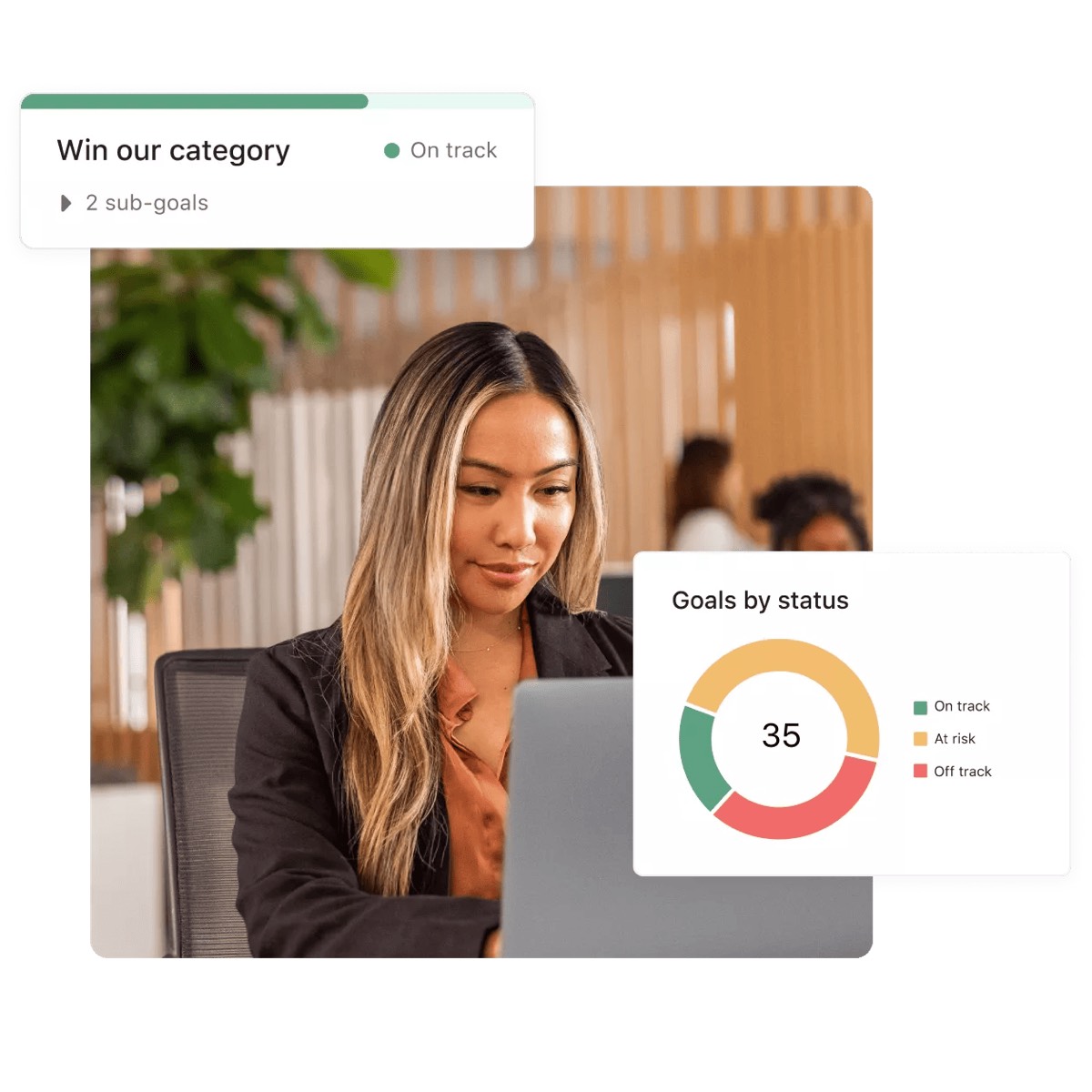
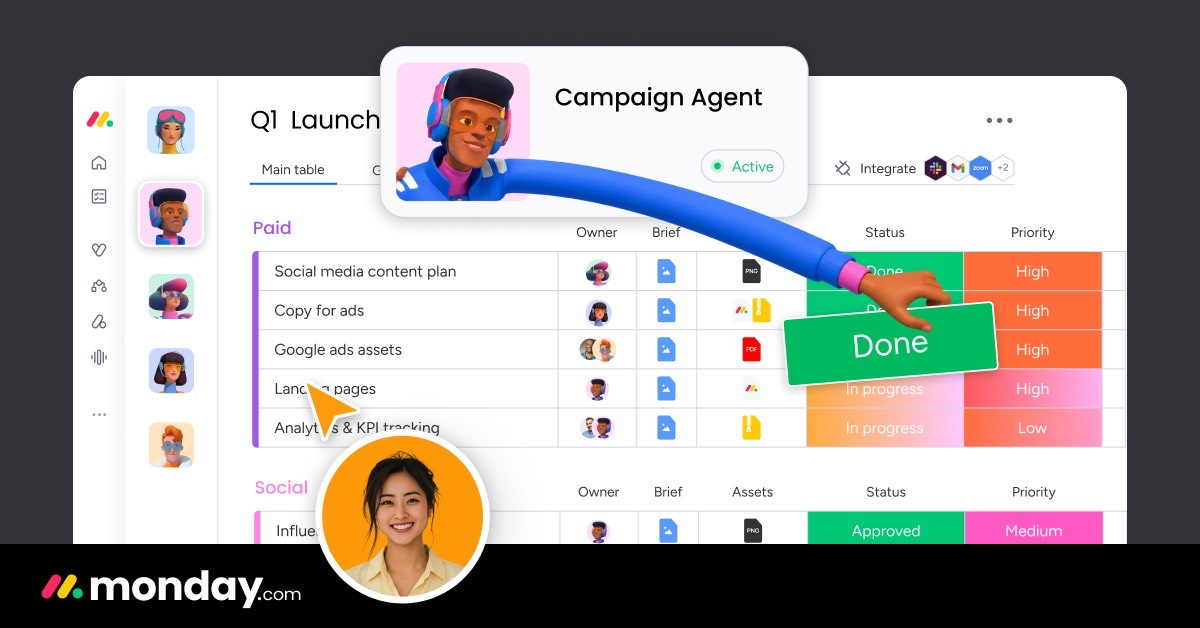
OKRs (Objectives and Key Results) are a goal-setting method: an objective describes what you want to achieve in plain, motivating words, and two to five key results describe how you'll measure it with numbers. A good OKR is ambitious, measurable and set for a fixed period, usually a quarter. Below are 30 examples grouped by team, a template, and how to track OKRs in tools you may already use, such as Asana, ClickUp, monday.com or Notion.
- Objective: qualitative and inspiring ("Make onboarding effortless").
- Key results: 2 to 5 measurable outcomes ("Cut time to first value from 14 to 7 days").
- Period: usually a quarter, sometimes a year for company-level OKRs.
- Key results measure outcomes, not tasks.
- Review progress weekly or every two weeks; score at the end of the period.

How to write a good OKR
- Start with a priority that matters this quarter.
- Write the objective as a short, clear statement of what success looks like.
- Ask "How would we know we achieved it?" and turn the answers into key results.
- Make each key result measurable, with a starting point and a target.
- Keep key results about outcomes. "Launch a help center" is a task; "Reduce repeat tickets by 20%" is a result.
- Limit each team to two or three objectives per quarter.
OKR template
| Element | Example |
|---|---|
| Objective | Become the go-to resource for small-business email marketing |
| Key result 1 | Grow organic traffic to email guides from 8,000 to 14,000 monthly visits |
| Key result 2 | Increase newsletter subscribers from 2,000 to 3,500 |
| Key result 3 | Reach a 3% click rate on the monthly newsletter |
| Owner | Content lead |
| Period | Q1 |
The numbers in every example below are illustrations. Set your own targets from your baselines.
Marketing OKR examples
- Objective: Build a steady pipeline from content.
- Key results: grow organic sign-ups from 150 to 300 a month; publish 12 pages targeting buying-intent keywords; get 5 new links from relevant sites.
- Objective: Make our email program a reliable revenue channel.
- Key results: raise email-attributed revenue by 25%; launch welcome and win-back flows; keep unsubscribes under 0.3% per send.
- Objective: Launch the new product with a bang.
- Key results: 1,000 waitlist sign-ups before launch; 200 trials in the first month; 20 genuine reviews within 60 days.
- Objective: Improve website conversion.
- Key results: lift demo request rate from 1.5% to 2.5%; cut mobile load time to under 2.5 seconds; run 4 landing page tests.
- Objective: Strengthen brand visibility in our niche.
- Key results: appear in 3 industry podcasts; double newsletter referral sign-ups; grow branded search by 20%.
Sales OKR examples
6. Objective: Build a predictable pipeline. Key results: add $300,000 in qualified pipeline; book 60 first meetings; keep every open deal with a next step. 7. Objective: Close more of the deals we already have. Key results: raise win rate from 18% to 24%; cut average sales cycle from 45 to 35 days. 8. Objective: Grow existing accounts. Key results: 15 upsell deals; increase net revenue retention from 100% to 108%. 9. Objective: Make the CRM our single source of truth. Key results: 100% of deals logged with stage and value; automate activity logging; weekly pipeline review attendance at 90%. See CRM implementation. 10. Objective: Enter a new market segment. Key results: 10 customers in the new segment; a segment-specific sales deck; 3 case examples.
Customer support OKR examples
11. Objective: Make getting help fast and easy. Key results: cut median first response time from 6 hours to 2; raise CSAT from 85% to 92%. 12. Objective: Help customers help themselves. Key results: publish 30 help articles; reduce tickets on the top 5 topics by 25%. See how to create a knowledge base. 13. Objective: Fix the causes of repeat issues. Key results: identify the top 3 ticket drivers; get 2 fixed by product; reduce reopen rate by 30%. 14. Objective: Support customers wherever they reach us. Key results: launch live chat during business hours; answer 90% of chats within 2 minutes. 15. Objective: Turn support into a loyalty driver. Key results: raise NPS from 20 to 35; follow up with 100% of detractors within 3 days. See Net Promoter Score.
Product OKR examples
16. Objective: Make onboarding effortless. Key results: cut time to first value from 14 to 7 days; raise onboarding completion from 40% to 65%. 17. Objective: Ship features customers actually use. Key results: 60% of active accounts use the new reporting feature within 60 days; 25 customer interviews. 18. Objective: Improve reliability. Key results: 99.9% uptime; cut critical bugs by half. 19. Objective: Reduce churn caused by product gaps. Key results: ship the top 2 requested features; reduce churn citing "missing feature" by 30%. 20. Objective: Speed up delivery. Key results: cut cycle time from 10 to 6 days; release every two weeks.
Operations and HR OKR examples
21. Objective: Spend less time on manual work. Key results: automate 5 recurring processes; save 20 hours a month. See how to automate business processes. 22. Objective: Control software costs. Key results: audit all subscriptions; cut unused seats by 20%; set renewal reminders for every tool. See SaaS spend management. 23. Objective: Make hiring faster and better. Key results: cut time to hire from 45 to 30 days; 90% of new hires rate onboarding 4 or 5 out of 5. 24. Objective: Build a team people want to stay in. Key results: raise engagement survey score by 10 points; 100% of staff have a development plan. 25. Objective: Run projects on time. Key results: 85% of milestones hit on schedule; weekly status updates for every active project. See how to manage multiple projects.
Small business and solo OKR examples
26. Objective: Grow a steady base of repeat customers. Key results: raise repeat purchase rate from 20% to 30%; launch a post-purchase email flow. 27. Objective: Get found by local customers. Key results: 30 new Google reviews; complete Business Profile; rank top 3 locally for 5 main services. See local SEO checklist. 28. Objective: Free up my time for high-value work. Key results: automate invoicing and follow-ups; delegate 5 hours of admin a week. 29. Objective: Build an audience I own. Key results: grow the email list from 300 to 1,000; send 12 newsletters this quarter. 30. Objective: Improve cash flow. Key results: cut average payment time from 40 to 25 days; move 5 clients to monthly retainers.
How to track OKRs
| Tool | How it supports OKRs | Free plan | Entry paid price (annual) |
|---|---|---|---|
| Asana | Goals feature linked to projects (paid tiers) | Personal, free for 2 users | Starter $10.99/user |
| ClickUp | Goals and targets linked to tasks | Free Forever | Core $9/user |
| monday.com | OKR board templates and dashboards | Up to 2 seats | Basic $9/seat (3-seat minimum) |
| Notion | OKR databases and templates | Free for individuals | Plus $10/seat (monthly) |
| Airtable | Custom OKR bases with progress fields | 1,000 records per base | Team $20/editor |
A spreadsheet works for a small team. When OKRs need to connect to projects and tasks, ClickUp and Asana make progress visible without extra reporting.
Track OKRs in ClickUp → Goals linked to the tasks that move them · Affiliate link
Scoring OKRs
Many teams score each key result from 0 to 1 at the end of the quarter. For ambitious OKRs, reaching about 0.7 is often treated as a good result; if you hit 1.0 on everything, targets were probably too safe. Use the score to learn, not to judge people.
Common mistakes
- Too many objectives at once.
- Key results that are tasks rather than outcomes.
- Setting OKRs and not looking at them until the end of the quarter.
- Linking OKRs directly to bonuses, which encourages safe targets.
- No baseline, so progress can't be measured.
Our verdict
OKRs work when they're few, ambitious and measurable, and when the team checks them every week or two. Use the examples above as starting points, set targets from your own baselines and track progress where the work already happens, such as ClickUp, Asana or a shared spreadsheet.
How we compiled this guide
This guide reflects common OKR practice. All examples and numbers are original illustrations. Tool details come from official pricing pages checked October 30, 2026.
FAQ
What does OKR stand for?
Objectives and Key Results.
How many key results should an objective have?
Usually two to five.
What is the difference between OKRs and KPIs?
KPIs track ongoing performance; OKRs set specific improvement goals for a period.
How often should OKRs be set?
Usually every quarter, with optional annual company-level OKRs.
Are OKRs useful for small businesses?
Yes, if you keep them to a few priorities and review them often.
What is a good OKR score?
For ambitious OKRs, around 0.7 is often considered a good result.
Sources
Common OKR practice; official pricing pages of Asana, ClickUp, monday.com, Notion and Airtable, checked October 30, 2026.