


Home › Software › Salesforce Starter Suite › Alternatives
Last updated: October 29, 2026
TechCurato is reader-supported. Some links on this page are affiliate links: if you sign up through them, we may earn a commission at no extra cost to you. It never changes which tools we recommend or how we rank them. Learn more.
5 Best Salesforce Alternatives for Small Business in 2026
Salesforce is the most powerful CRM on the market, and for most small businesses that is exactly the problem. Its full Sales Cloud editions cost $195 to $550 per user per month on annual billing, and getting real value out of them usually means paying an administrator or consultant too.
We compared five alternatives that small and mid-sized sales teams actually switch to, with the monthly cost for a 10-person team.
Quick answer: the best Salesforce alternatives
- Pipedrive — best for sales teams that live in their pipeline.
- HubSpot — best free CRM, with marketing and service tools that grow with you.
- monday CRM — best for teams that want a CRM their whole company can customize.
- Zoho CRM — best value for teams that need Salesforce-style customization.
- Salesforce Starter Suite — the option if you want to stay with Salesforce at $25 per user.
Salesforce alternatives compared
Prices per user per month, billed annually. Checked on October 29, 2026.
| CRM | Free plan | Entry plan | Mid-tier plan | 10 users on mid-tier | Best for |
|---|---|---|---|---|---|
| Salesforce Sales Cloud (reference) | No — free trial | Starter Suite: $25 | Pro Suite: $100 · Sales Cloud Core: $195 | $1,000–$1,950/month | Large, complex sales orgs |
| Pipedrive | No — 14-day trial | Lite: about $14 | Growth: about $39 | about $390/month | Pipeline-driven sales teams |
| HubSpot Sales Hub | Yes — up to 2 users | Starter: $7 per seat | Professional: $90 per seat | $900/month + $1,500 onboarding | Free start, all-in-one growth |
| monday CRM | No — free trial | Basic: 12 (3-seat minimum) | Standard: 17 | about 170/month | Customizable workflows |
| Zoho CRM | Yes — up to 3 users | Standard: about $14 | Professional: about $23 | about $230/month | Customization on a budget |
monday CRM prices were displayed in euros on its pricing page; USD prices are typically the same figures.
Why small businesses look for a Salesforce alternative
- Cost. Sales Cloud Core is $195 per user per month on annual billing; Advanced is $395 and Max $550. For a 10-person team, that is $23,400 a year at the entry Sales Cloud edition.
- Complexity. Salesforce can model almost any sales process, but setup and maintenance usually need a dedicated admin. Small teams rarely use more than a fraction of it.
- Time to value. Lighter CRMs can be running in an afternoon; a Salesforce rollout is a project.
- The community agrees. The top Google result for this search is a Reddit thread in r/salesforce itself, where users discuss which alternatives fit smaller teams.
The 5 best Salesforce alternatives in detail
1.  Pipedrive — best for pipeline-driven sales teams
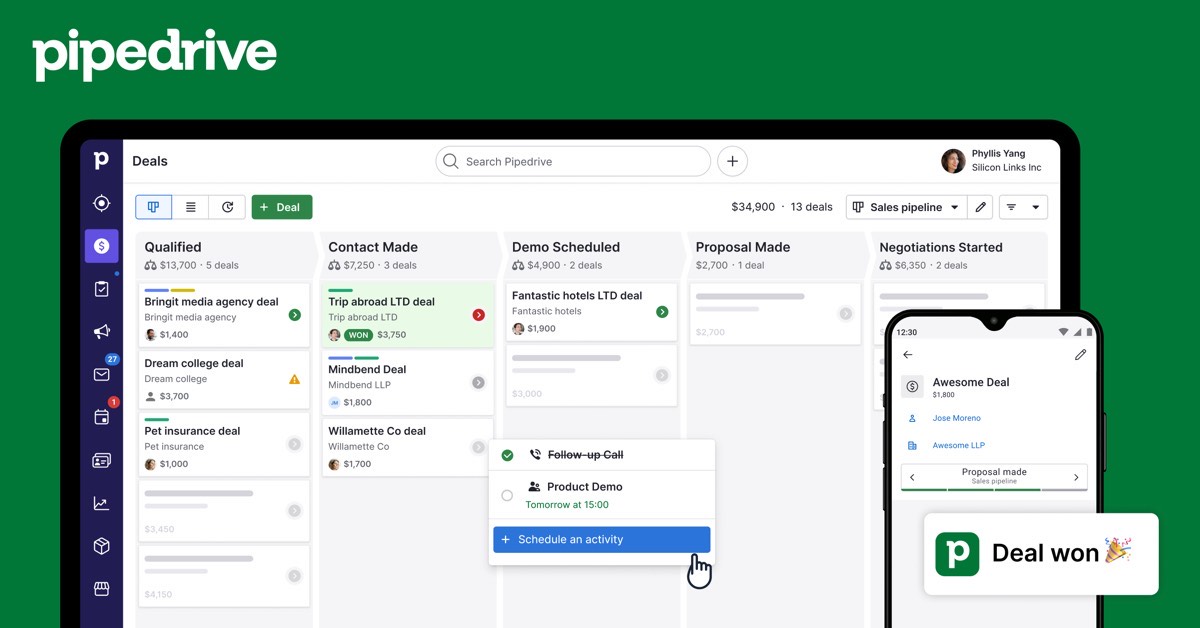
Pipedrive is built around one screen: the visual sales pipeline. Deals move from stage to stage by drag and drop, and the tool constantly nudges reps toward the next action. For small sales teams that found Salesforce overwhelming, it is the most common switch.
Pricing: no free plan, but a 14-day trial. According to 2026 pricing guides, plans cost about $14 (Lite), $39 (Growth), $49–59 (Premium) and $79 (Ultimate) per seat per month on annual billing, with monthly billing costing more. Add-ons such as Campaigns are billed separately.
- Pros: very fast to adopt; excellent pipeline visibility; strong mobile app.
- Cons: no free plan; marketing features are paid add-ons; less customizable than Salesforce or Zoho.
Choose it if: your team sells through a clear pipeline and wants a CRM reps will actually use.
2.  HubSpot — best free CRM that grows with you

HubSpot's CRM is free for up to 2 users and covers contacts, companies, deals and pipelines. When you need more, Sales Hub, Marketing Hub and Service Hub plug into the same database — the "all-in-one" model Salesforce sells, without the implementation project.
Pricing: free for up to 2 users. Sales Hub Starter costs $7 per seat per month on annual billing ($20 monthly). Professional costs $90 per seat annually ($100 monthly), plus a one-time $1,500 onboarding fee.
- Pros: genuinely useful free plan; very easy to use; sales, marketing and support on one platform.
- Cons: big price jump from Starter to Professional; onboarding fee on Professional; advanced features sit in expensive tiers.
Choose it if: you want to start free and add marketing and support tools later.
3.  monday CRM — best for customizable workflows
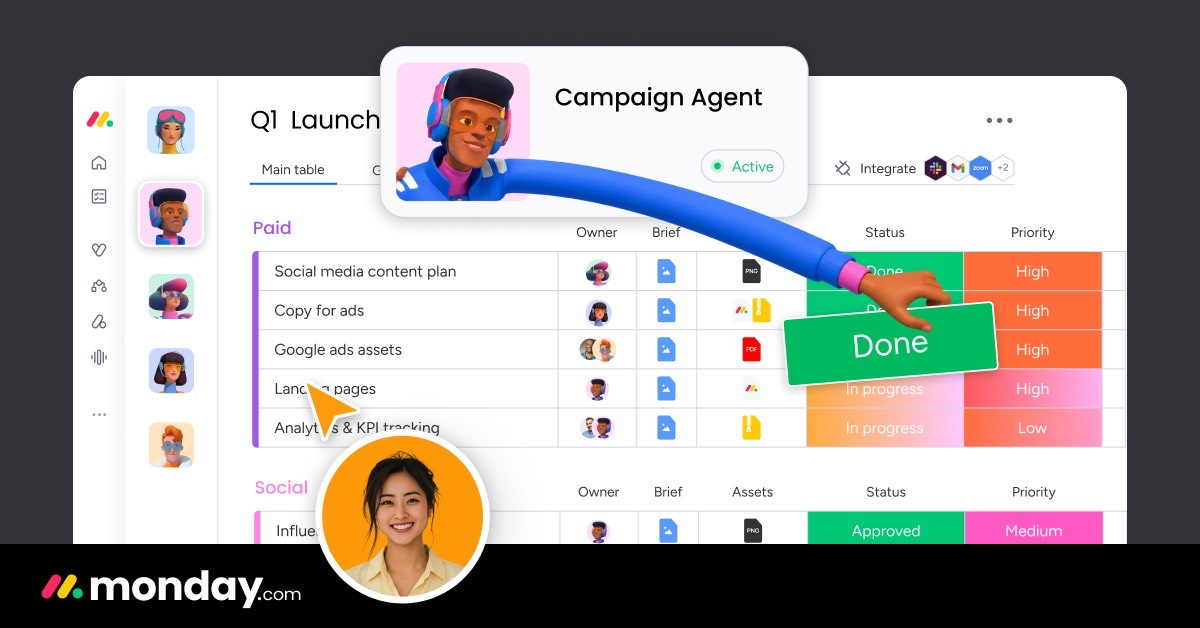
monday CRM is built on the same boards as monday.com's work management product. That makes it easy to customize — and easy to connect sales with the teams that deliver after the deal closes, such as onboarding, projects or support.
Pricing: Basic 12, Standard 17 and Pro 28 per seat per month on annual billing (displayed in euros), with a 3-seat minimum. Standard includes 250 custom automations per month; Pro includes 25,000.
- Pros: very flexible boards; easy hand-off from sales to delivery teams; clean interface.
- Cons: 3-seat minimum; automation limits on Standard; less depth in sales forecasting than Salesforce.
Choose it if: your sales process is unique, or tightly linked to project delivery.
4.  Zoho CRM — best value for customization
Zoho CRM is the closest to Salesforce in depth — custom modules, workflow rules, territories, forecasting — at a fraction of the price. It is also part of the wider Zoho suite (Books, Desk, Campaigns), which can replace several tools at once.
Pricing: free for up to 3 users. According to 2026 pricing guides, Standard costs about $14, Professional $23, Enterprise $40 and Ultimate $52 per user per month on annual billing.
- Pros: Salesforce-like customization at a low price; free plan for 3 users; large suite of connected apps.
- Cons: interface is busier than Pipedrive or HubSpot; setup takes more time than lighter CRMs.
Choose it if: you need Salesforce-level customization on a small-business budget.
5.  Salesforce Starter Suite — if you want to stay with Salesforce
If your concern is price rather than Salesforce itself, Starter Suite is a simplified, pre-configured edition for small teams. It keeps the Salesforce platform, so you can upgrade later without migrating.
Pricing: Starter Suite costs $25 per user per month and Pro Suite $100, billed annually, with a free trial.
- Pros: the Salesforce ecosystem at a small-team price; no migration if you grow into Sales Cloud.
- Cons: the jump to full Sales Cloud editions ($195+) is steep; still more complex than Pipedrive or HubSpot.
Choose it if: you expect to need full Salesforce within a couple of years.
How to choose the right Salesforce alternative
- Map your sales process first. A simple pipeline points to Pipedrive or HubSpot; complex custom objects point to Zoho CRM.
- Price it for your team in two years. Multiply the per-seat price by your future headcount, and include onboarding fees.
- Check integrations. Make sure your email, calendar, telephony and accounting tools connect natively.
- Run a real trial. Import a sample of your Salesforce data (accounts, contacts, open deals) and have two reps use it for a week.
- Plan the data migration. Export reports from Salesforce, map fields, and migrate in stages — contacts first, then open deals, then history.
FAQ
What is the best free alternative to Salesforce?
HubSpot's free CRM (up to 2 users) and Zoho CRM's free edition (up to 3 users) are the best free options.
What is the cheapest alternative to Salesforce?
HubSpot Sales Hub Starter ($7 per seat on annual billing) and Pipedrive Lite (about $14 per seat) are the cheapest paid options here.
Which CRM is most similar to Salesforce?
Zoho CRM is the closest in depth and customization. Salesforce's own Starter Suite is the closest if you want the same platform at a lower price.
Is Pipedrive better than Salesforce for small businesses?
For most small sales teams, yes: Pipedrive is faster to set up, easier for reps to adopt and far cheaper. Salesforce is better when you need complex customization, territories or enterprise reporting.
Is HubSpot cheaper than Salesforce?
At the entry level, yes: HubSpot has a free CRM and Starter at $7 per seat. At the professional level, HubSpot Sales Hub Professional ($90 per seat) is closer to Salesforce Pro Suite ($100).
How we compared these tools
Prices were checked on October 29, 2026 on each vendor's pricing page, or in recent pricing guides where the vendor's page did not display prices. Vendors change pricing often; tell us if something is out of date.